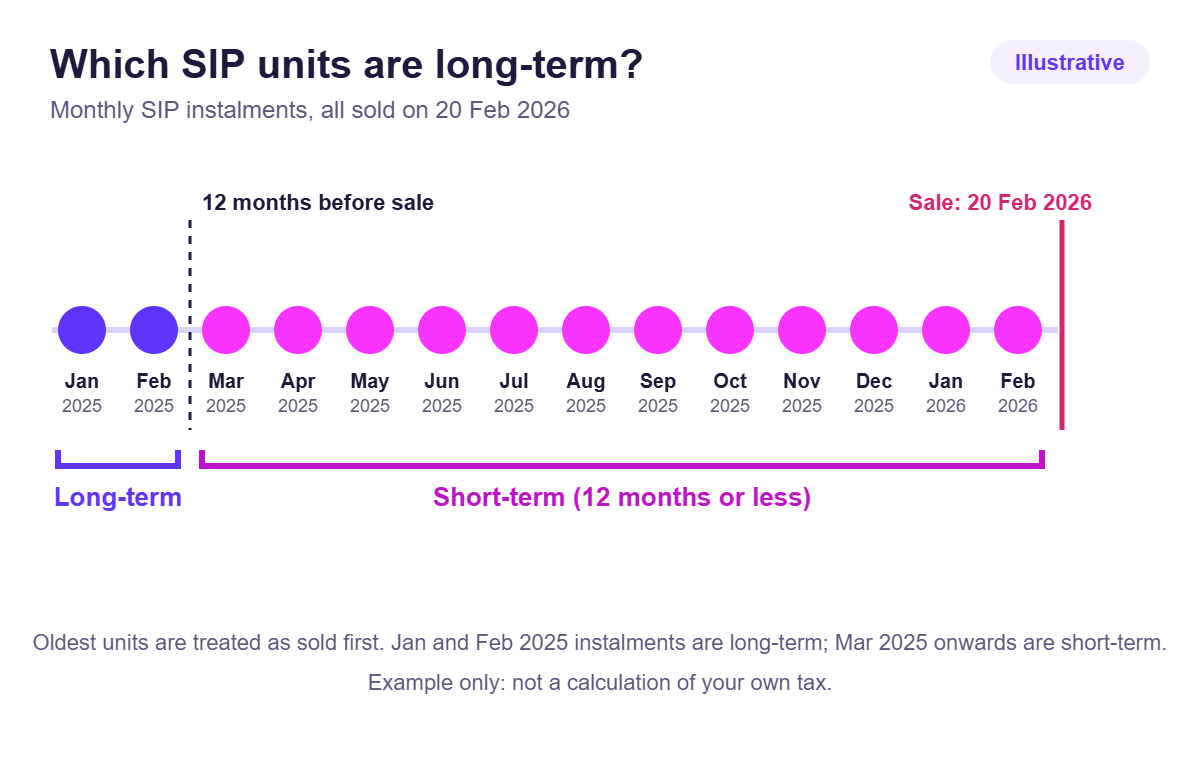
Mutual fund tax in India depends on three things: the type of fund, how long you held each unit, and when you bought it. With SIPs the second one gets tricky, because every monthly instalment has its own purchase date. Here is how the rules work, using the rates in force as of October 2026.
Quick reference: capital gains tax on mutual funds
| Fund type | Short-term | Long-term | Notes |
|---|---|---|---|
| Equity-oriented (at least 65% in domestic equity) | 12 months or less: 20% | More than 12 months: 12.5% on gains above ₹1.25 lakh a year | The ₹1.25 lakh exemption applies to long-term equity gains only |
| Debt-oriented (‘specified’) funds, units bought on or after 1 April 2023 | Slab rate | Slab rate | Treated as short-term regardless of holding period (Section 50AA) |
| Other non-equity funds, e.g. some hybrid or gold funds | Slab rate | 12.5% after the qualifying holding period | Depends on how the fund is classified; check the scheme documents |
Rates exclude surcharge and the 4% health and education cess.
How is a fund classified as equity-oriented?
Broadly, a fund counts as equity-oriented when at least 65% of its assets are in domestic equities. Pure equity funds usually clear that bar. Many hybrid funds do not, which is why the same investor can face different tax on two funds that both hold some shares. The fund’s factsheet or scheme documents show the category.
How do holding periods work for SIP units?
Each SIP instalment is a separate purchase with its own date and cost, and units are generally treated on a first-in, first-out basis: the oldest units are considered sold first. Suppose you invest ₹10,000 on the 5th of every month in an equity fund from January 2025, and redeem part of the holding on 20 February 2026. The January and February 2025 instalments have been held for more than 12 months, so gains on those units are long-term. Instalments from March 2025 onwards are still short-term. One redemption can therefore produce both kinds of gain.