
If you’ve ever tried to get a clear picture of your family’s finances, you know the drill: log into three banking apps, download a mutual fund statement from another app, dig up a loan account number from an email somewhere, and then try to make sense of it all in a spreadsheet. It’s slow, and every login is one more password floating around.
Since 2021, India has had a government-backed system built specifically to solve this: the Account Aggregator, or AA, framework. Here’s what it actually is, how it works, and why it’s considered safe enough that banks, RBI, and fintech apps all rely on it.
What Is an Account Aggregator?
An Account Aggregator is a licensed entity — regulated as an NBFC-AA by the Reserve Bank of India — that lets you share your financial data between institutions digitally, with your explicit consent, instead of manually downloading and uploading statements or handing over your banking passwords.
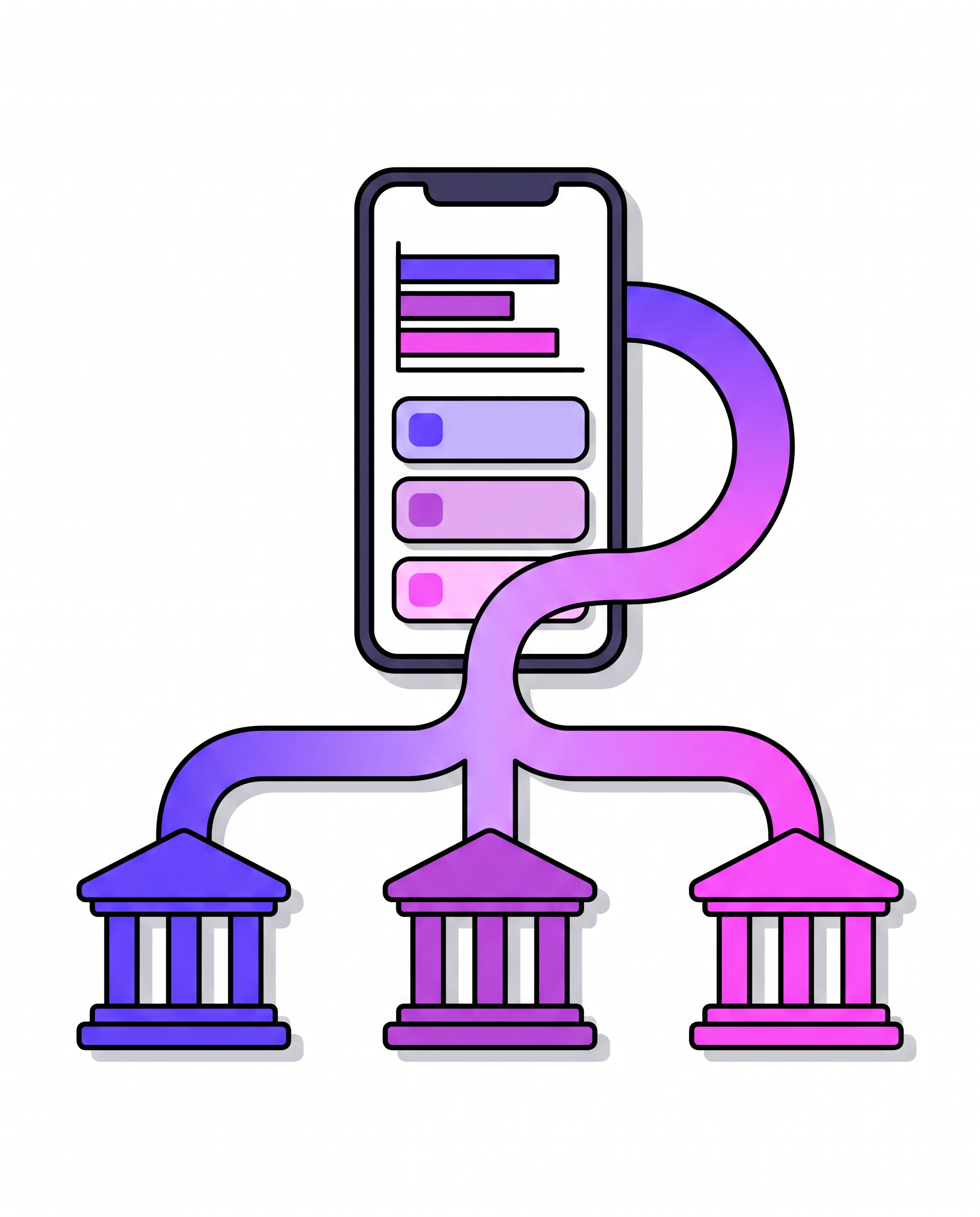
Think of an AA as a secure pipe, not a data warehouse. It doesn’t store or read your financial information. It simply carries data — with your permission, for a purpose you approve, for a time period you set — from the institution that holds it (your bank, for instance) to the institution or app you want to share it with (a lender, a wealth-tracking app, or another financial institution).
The framework sits alongside Aadhaar (identity) and UPI (payments) as one of India’s core pieces of digital public infrastructure. It was recognised as such during India’s G20 presidency in 2023.
How the Account Aggregator Framework Works
The system has three types of participants, each with a specific role:
Financial Information Providers (FIPs) are the institutions that hold your data — banks, mutual fund houses, and other RBI-regulated entities that have gone live on the AA network.
Financial Information Users (FIUs) are the apps or institutions that want to use your data with your permission — for example, an app helping you track your net worth, or a lender assessing a loan application.
Account Aggregators (AAs) are the licensed intermediaries that manage consent and move the data between FIPs and FIUs, without ever storing or viewing it themselves.
Technical Service Providers (TSPs) are licensed technology companies that refine the data received by AAs so that accurate, clean data is passed on to users.
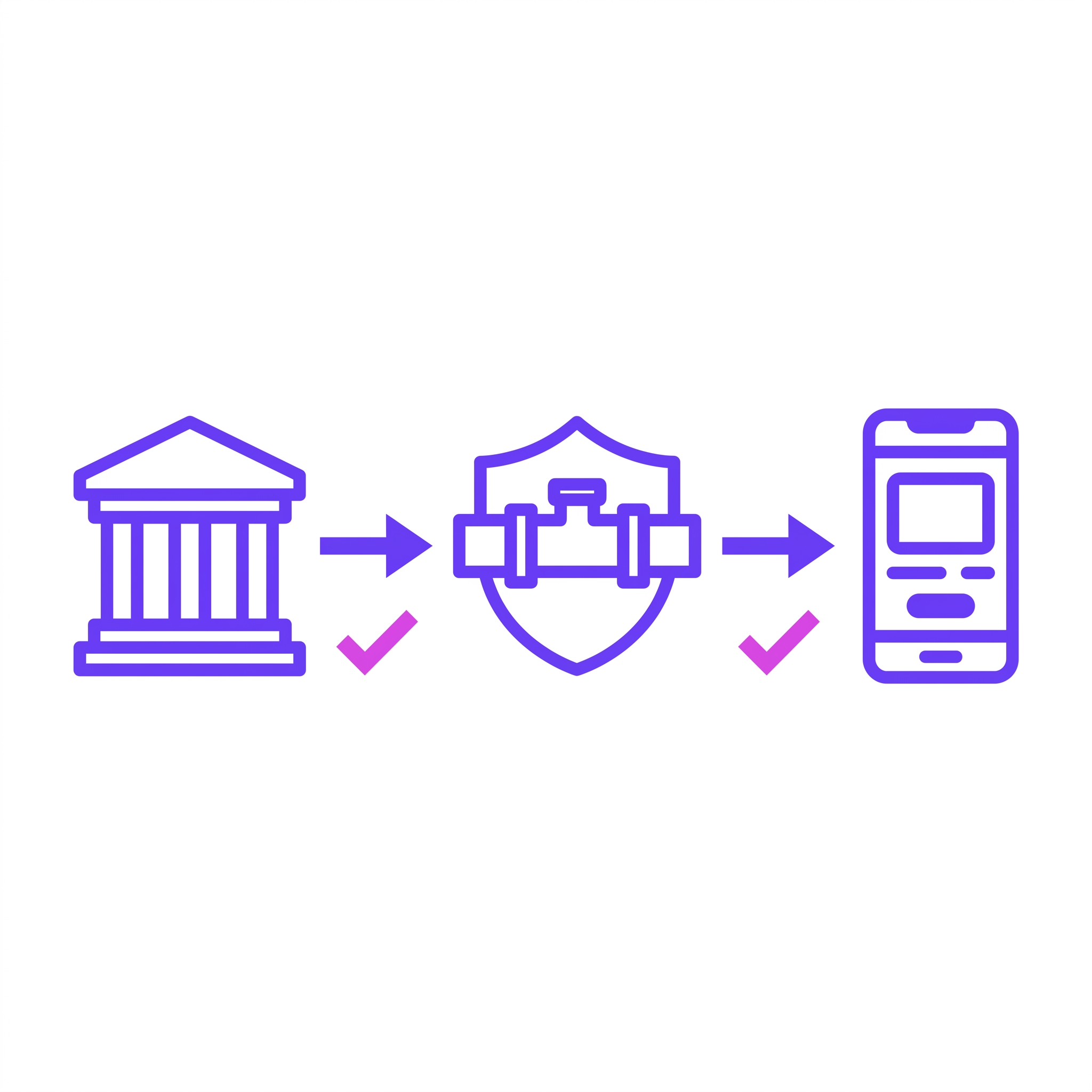
In practice, using AA looks like this:
- You choose to link an account (say, your savings account) through an AA app or a service that uses the AA framework.
- You’re redirected to your bank to verify you’re the account holder — usually via OTP. Your banking password never leaves your bank’s own system.
- You see a consent screen that specifies exactly what data will be shared, with whom, for how long, and for what purpose.
- Once you approve, the data flows directly from your bank to the requesting app, through the AA, in encrypted form.
- You can revoke that consent at any time, and the data-sharing stops.
This is fundamentally different from the “screen-scraping” or password-sharing methods some older fintech tools used, where you’d hand over your net banking credentials to a third party.
Is Account Aggregator Safe?
This is the question most people actually want answered, so here’s the direct version.
The AA framework was built under RBI’s Master Directions, with the regulatory groundwork laid in 2016 and commercial operations beginning on 2 September 2021. Every Account Aggregator operating in India needs an NBFC-AA license from the RBI — as of 2026, 17 licensed Account Aggregators are live, connected to a network of roughly 179 Financial Information Providers (mostly banks and asset managers) and hundreds of Financial Information Users. Sahamati, the industry alliance that coordinates the ecosystem, has itself been recognised by RBI as the sector’s Self-Regulatory Organisation.
A few specific safety features are worth knowing:
- You’re never asked for your banking password by an AA or the app using it. Verification happens directly with your bank, typically via OTP.
- Consent is granular and time-bound. You can choose to share three months of bank statements for a specific purpose, and that access expires automatically.
- Data isn’t stored by the Account Aggregator. It’s a pass-through system — RBI’s directions specifically prohibit AAs from retaining the financial data they transmit.
- You can see and revoke every consent you’ve given, usually from within the AA app itself.
That said, “safe by design” doesn’t mean “risk-free by default” — as with any consent-based system, it’s worth reading what you’re approving before you tap “allow,” particularly the purpose and duration of access.
What Kind of Data Can Be Shared via AA?
Currently, the accounts most commonly available on the AA network include:
- Bank accounts (savings, current)
- Fixed deposits
- Mutual fund and SIP holdings (from asset managers who’ve gone live as FIPs)
- Stocks & ETFs
- Insurance (initial stage)
- InVit/ ReIT/ AIFs/ CIS
- NPS
- GSTR
Coverage varies by bank and institution — not every account type is available from every provider yet, since it depends on which FIPs have integrated with the network. The ecosystem has been expanding steadily each year since 2021. The AA framework is working on providing visibility into 20 data types to users, for complete visibility across these asset classes.
Common Questions About Account Aggregator
Is using an Account Aggregator mandatory?
No. AA is one method of sharing your data — you can always choose to submit documents or statements manually instead. AA exists to make consent-based sharing faster and more secure when you do want to share.
Does the Account Aggregator charge me anything?
Individual users typically don’t pay AAs directly. Some AAs and the apps built on top of them may have their own business models, but linking and sharing your own data isn’t something users are billed for.
Can I use AA to see all my accounts in one dashboard?
Yes — this is one of the most common uses of the framework. Apps built on AA can pull your linked accounts into a single, auto-updating view, instead of you manually compiling numbers from different logins each month.
What happens if I revoke consent?
The requesting app immediately stops receiving new data from your bank for that account. Historical data already shared under the terms of that consent isn’t automatically deleted from the requesting app’s own systems, so it’s worth checking that app’s data retention policy separately.
The Bigger Picture
For Indian families juggling SIPs in one app, an FD in one bank, and a loan somewhere else, the Account Aggregator framework is quietly one of the more useful pieces of infrastructure to understand — it’s the reason a growing number of apps can now show you a consolidated, bank-verified view of your finances without you ever handing over a password. Famli is one of the apps built on this framework, using it to help families see their accounts, SIPs, FDs, and loans in one place, with each family member controlling what they choose to share.
Famli is a SEBI-registered Investment Adviser (INA000021979). This article is educational content about the Account Aggregator framework and does not constitute investment advice. Please read all scheme related documents carefully before investing.
Sources
- Reserve Bank of India — Master Directions for Account Aggregators (2016)
- Sahamati Foundation — “Account Aggregators” and industry ecosystem statistics, sahamati.org.in (accessed August 2026)
- Press Information Bureau, Government of India — “Celebrating four years of launch of the Account Aggregator Ecosystem”
- Department of Financial Services, Ministry of Finance — Account Aggregator Framework overview, financialservices.gov.in